

















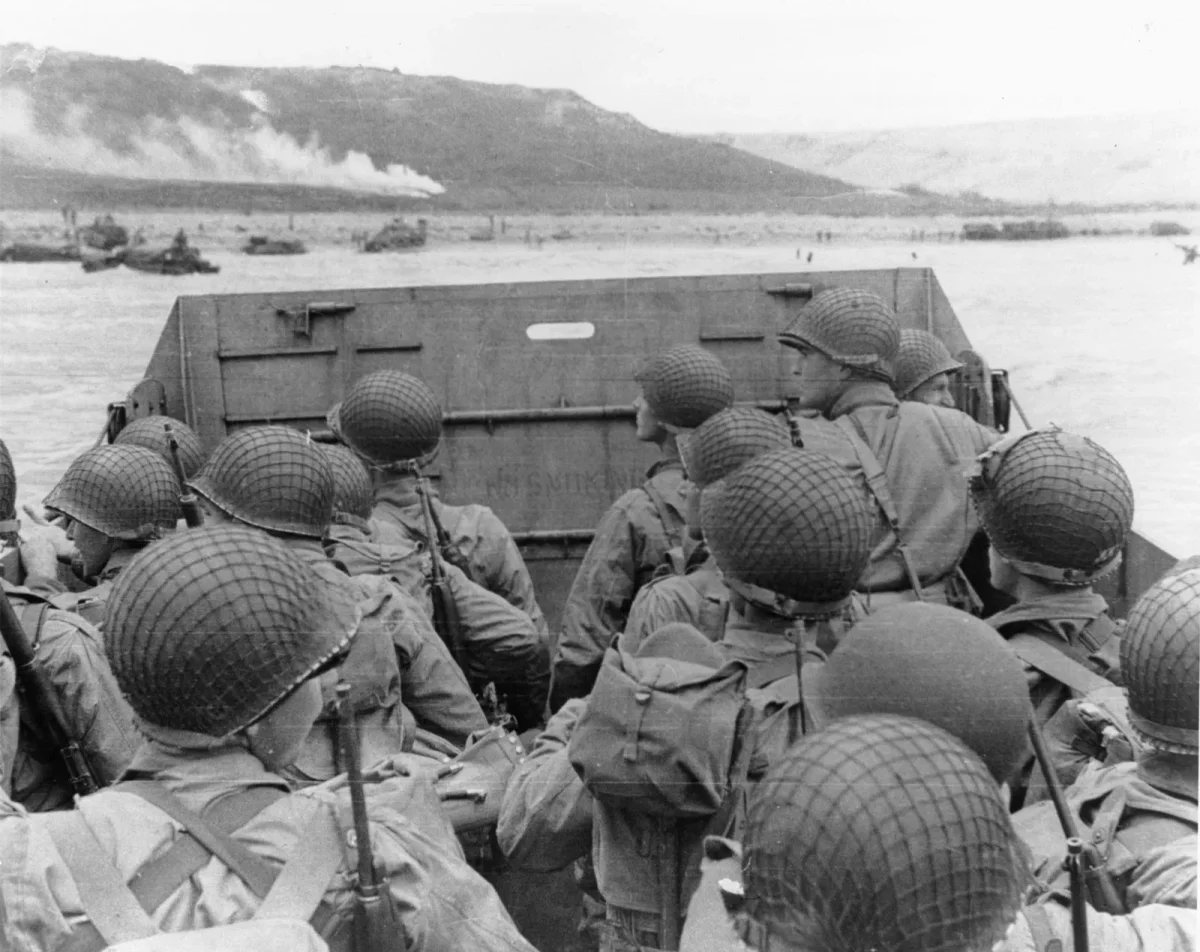
On June 6, 1944 allied soldiers stormed the beaches of Normandy, France to liberate it from Nazi Germany. It was codenamed “Operation Neptune.” It is the largest seaborne invasion in history. Planning for this invasion began in 1943 and began shortly after the midnight on the morning of June 6, 1944 with extensive aerial and naval bombardment as well as an airborne assault of the landing of 24,000 American, British, and Canadian troops. The stretch of the Normandy coast was divided into five sectors which were Utah, Omaha, Gold, Juno, and Sword. when the allied soldiers landed under heavy fire from the Germans they were not only bombarded by bullets but also had to deal with land mines, and obstacles such as wooden stakes, metal tripods, and barbed wire. All of this made it harder for the allies to liberate the beach. The highest number of casualties were at Omaha, with its high cliffs. At Gold, Juno, and Sword, several fortified towns were cleared in house to house fighting and two major weapon emplacements at Gold were disabled using specialized tanks. The total German casualties on D-Day were an estimated 4,000 to 9,000 men and for the allies it was at least 10,000. after two months of brutality the allies would completely liberate Normandy from German occupied forces by August 30, 1944.
Categories:
D-DAY
More to Discover



About the Contributor

Daniel Contreras, staff writer
My name is Daniel. I’m a junior and I play Clash Royale.