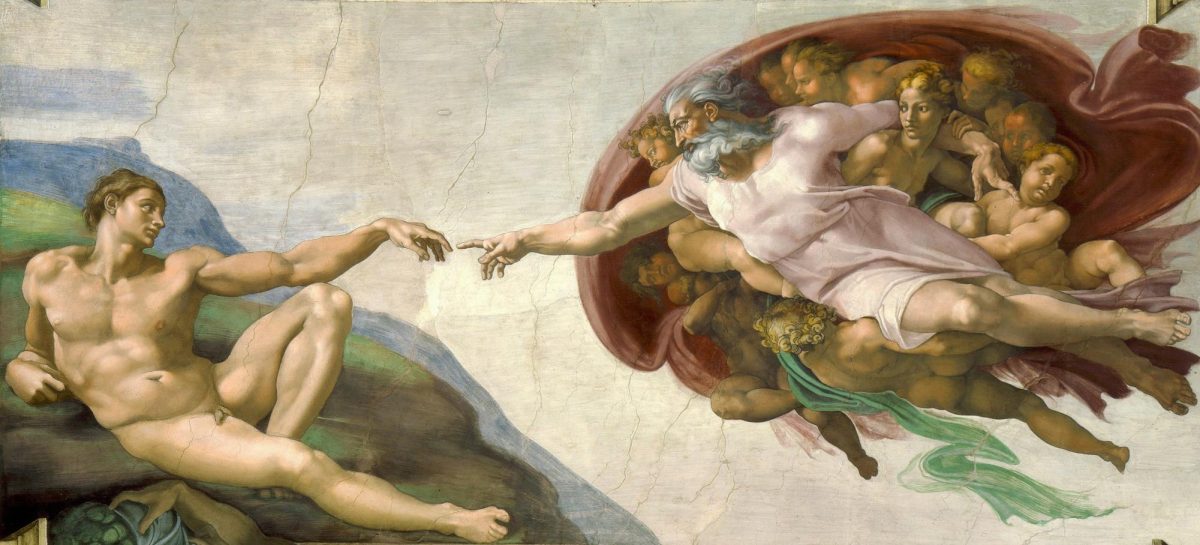
















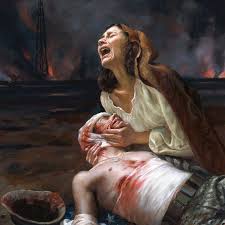
Max Ginsburg painted “War Pieta” in 1972 during the time of the Vietnam War. The war sparked intense controversy and debate in the United States, especially among families whose sons were being sent off to war. This caused many Americans to question the purpose and cost of the conflict because thousands of young soldiers were dying and many civilians in Vietnam were also suffering. Ginsburg created this painting as a critique to the human cost of war. The title references the traditional Pieta theme in Christian art, where the Virgin Mary holds the dead body of Jesus after the crucifixion. One of the most famous examples is Pieta by Michelangelo. By using this title, Ginsburg connects the grief of Jesus’ mother to the grief of modern families who lose loved ones in war.
In War Pieta a grieving mother holds the lifeless body of her son, who is a young American soldier. The son is wearing military clothing, showing he died during combat. The mother’s face and body language express immense sorrow. She cradles him in her arms the same way Mary holds Jesus in traditional Pieta artworks, exemplifying a mother’s grief. They are surrounded by fire and smoke, representing the chaos and destruction of war. The focus of the painting, however, remains on the mother and her son. Their positioning draws attention to the emotional center of the painting, the devastating moment when a family loses someone to war.
War Pieta highlights the emotional and human consequence of war. The painting reminds viewers that war does mot only affect soldiers on the battlefield. It also deeply impacts family and friends who must live with the loss. During the Vietnam War, many families experienced this tragedy, which is why anti war movements became more popular. Even today, the message remains relevant. Modern conflicts continue to cause loss of life and long term trauma for soldiers and civilians alike. And by showing a mother mourning her child, War Pieta forces reflection on the consequence of violent conflict.