















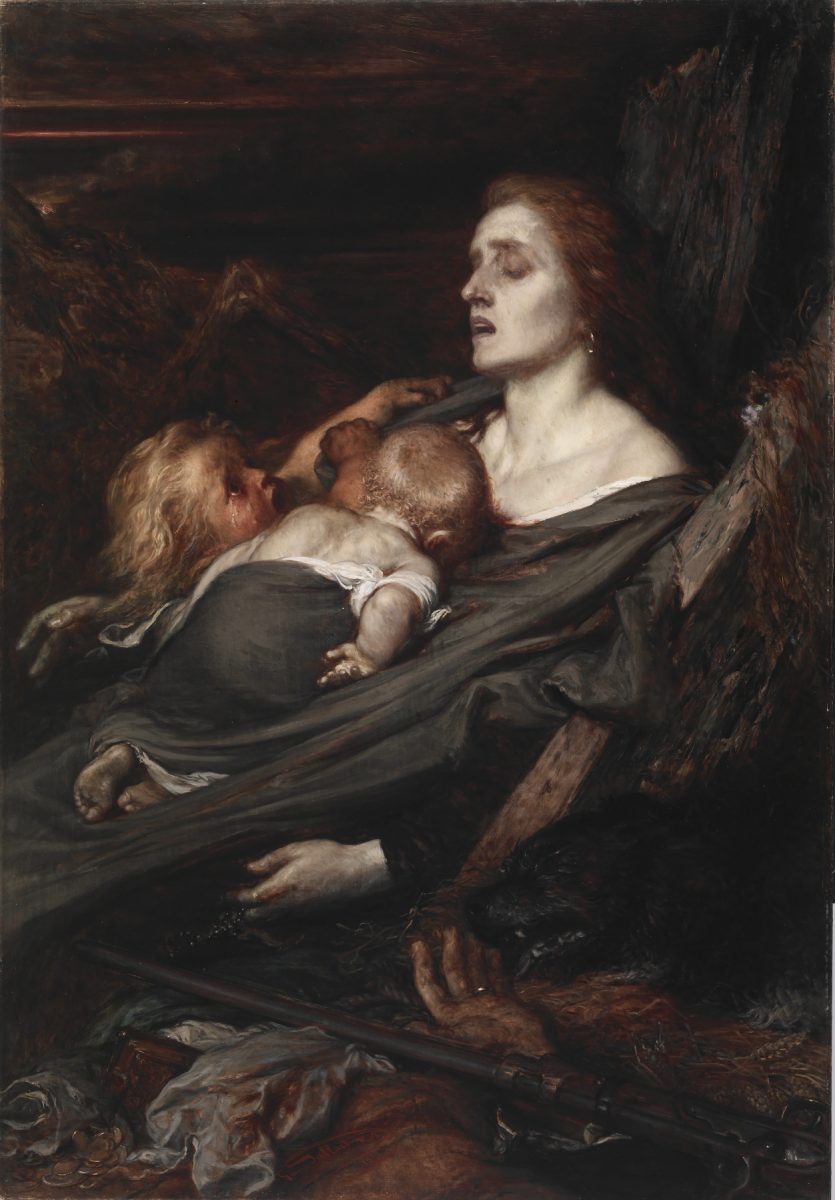
Louis Gallait’s painting “War” (1853) reflects the dramatic human cost of conflict during the 19th century, a period marked by political upheaval and revolutionary movements across Europe, including the aftermath of the 1848 revolutions. Historically, Gallait was influenced by Romanticism and the growing interest in realism, aiming to depict the emotional and moral consequence of war rather than glorifying battle. In the painting, he focuses on the suffering of civilians, particularly women, children, and the wounded, highlighting the indiscriminate toll of armed conflict, with dark, muted tones emphasizing despair and chaos. The composition directs the viewer’s attention to the human figures rather than the battlefield itself, making war intimate and tragic rather than heroic. This work resonates with real world issues today, as it mirrors modern conflicts where civilians bear the brunt of violence, from refugee crises to humanitarian disasters, reminding viewers that the human cost of war transcends time and geography, and promoting reflection on the the ethical responsibility on the the ethical responsibility of societies to prevent such suffering.
Categories:
War
Louis Gallait
More to Discover


About the Contributor
Chloe Barraza, staff writer
Hi, my name is Chloe Barraza, I am currently a sophomore at Elsinore High School. When I’m not at school you can find me painting and spending time with my friends. However, after I graduate, I plan to transfer to a UC school to pursue law.