





















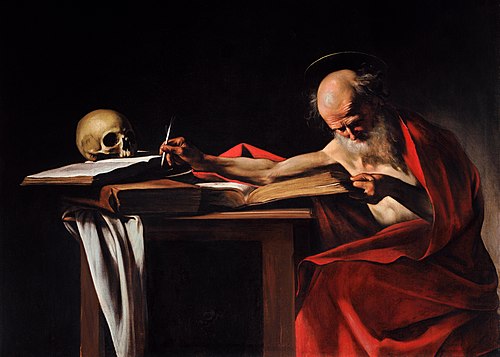
The Saint Jerome Writing was painted by Caravaggio around 1605-1606 during the Baroque period, a time when the Catholic church used dramatic art to inspire faith during the Counter-Reformation. The subject, Saint Jerome, was an early Christian scholar best known for translating the Bible into Latin. Caravaggio’s work reflects the church’s desire for emotional intensity and realism, showing religious figures as human and relatable rather than idealized.
In the Saint Jerome Writing, Caravaggio uses strong contrasts of light and shadow to draw attention to Jerome’s focused expression and aged body, emphasizing both intellect and mortality. The sparse setting, along with objects like the skull and books, highlights themes of death, knowledge and devotion. Jerome’s hunched posture in intense concentration suggests discipline and spiritual commitment while the dramatic lighting creates a quiet almost solemn mood that reinforces the seriousness of his work and the inevitability of death.